




The focus on the next Micronora will put the light on micro-mechatronics. In this context, many innovative SMEs will go to demonstrate their know-how through mechatronic products in Besançon from September 23 to 26, 2014. (

The focus on the next Micronora will put the light on micro-mechatronics. In this context, many innovative SMEs will go to demonstrate their know-how through mechatronic products in Besançon from September 23 to 26, 2014. (
Aware of the importance to announce this event, the organizers of Micronora have implemented many means of communication and we had the chance to be in. Today, we introduce Dextérité Surgical who developed a mechatronics system dedicated to minimally invasive surgery.
Three possibilities Currently, three major families of means are at work: the good old laparoscopic method invented in the 1990s, robotic surgery systems () and most recently, a new system of mobile mechatronic handled device which greatly simplifies the comfort of the surgeon while representing a small share budget of a robot. The ideal solution?
What are we talking about? Traditional laparoscopic methods involve working with long tools (pliers, scissors) that pass through the abdominal wall (for example) and with which surgeons must work while being very limited in angles and movements. The idea of dexterity Surgical was to robotize a manual tool to allow all the degrees of freedom at the end of the tool. Thus the surgeon can avoid traditional physical problems (bad posture, not ideal working angle, etc).
From the "Bazooka" to the DEX robot Dextérité Surgical had the idea to implement a tool with a head offering unlimited rotation, bilateral inclination and endowed with a good rigidity. Problem, no electrical device (motor for example) is allowed within the human body. The system had therefore to transmit movements through a complex system of gears. The first prototype was, according to the say of the surgeon, a true "bazooka", heavy and quite not ergonomic... but close collaboration has enabled the development of a very lightweight and user-friendly tool. The surgeon tells us: "According to the type of operation, I was watching the last actions that require high dexterity with reserve, because I knew it would be complicated. Today with the DEX robot, I’m much more serene".
Growing... and this is just the beginning This product developed and manufactured in France is fully suitable for sterilisation and usable in all operating rooms. So far the company has equipped 13 hospital centres in Europe and 300 patients have already benefited from this technology... but it is a drop in the ocean, the potential of the market is important and dexterity Surgical does not hide his ambitions.
Dexterité Surgical 53, rue Carnot F-74000 Annecy Tel. + 33 4 56 70 29 37 Fax + 33 4 26 23 67 11
.
To be discover at Micronora 2014 .

.
.
Tous les articles publiés sur Micronora, c’est ici. pu
...brought to you by Eurotec-Online.com




The divide is widening ever further between advocates of a ‘no-rules’ approach and those in favour of more or less stringent legislation – seemingly to the detriment of the latter. Are entrepreneurial freedom and respect for individual rights or safety standards necessarily at odds with one another?


The company stands out for its expertise in high-performance composites, a field in which it designs bespoke solutions that meet the most demanding requirements. By Pierre-Yves Schmid A subsidiary of the Busch Group, a global specialist in vacuum pumps employing 8,000 people across 23 production sites worldwide, Composites Busch began operations in 1988 in Chevenez, manufacturing vanes for these pumps. Now based in Porrentruy, this company, which employs 103 people, still manufactures (…)

In mid-February, the Switzerland Innovation Park in Biel hosted the second edition of the International Humanoid Forum. University professors, established industrialists and start-up executives came from all over the world to share their vision of the potential integration of humanoid robots in industry, healthcare and the home. At the end of two days of conferences, seminars and workshops, the question was no longer whether this integration would happen, but when... Points of view. The (…)

This year, the coveted HERMES Startup Award goes to a young Swiss company. The startup impressed the independent jury, chaired by Prof. Dr.-Ing. -Ing. Holger Hanselka, President of the Fraunhofer Society, with the ultra-thin, fully flexible solid-state batteries they have developed. The award was presented by Dorothee Bär, Federal Minister for Research, Technology and Space, during the official opening of HANNOVER MESSE on April 19, 2026, in the presence of Federal Chancellor Friedrich (…)

Dürr’s latest innovation enables direct 2K varnish return in the atomizer, eliminating VOC emissions, successfully used in two lines for a year. Until now, significant amounts of volatile organic compounds (VOCs) were released into the paint booth during flushing and color changes with mixed two-component (2C) paint systems. In conventional processes, residual paint is flushed forward into a funnel or directly into the washout, leading to VOC pollution in over 70 percent of the booth air. (…)
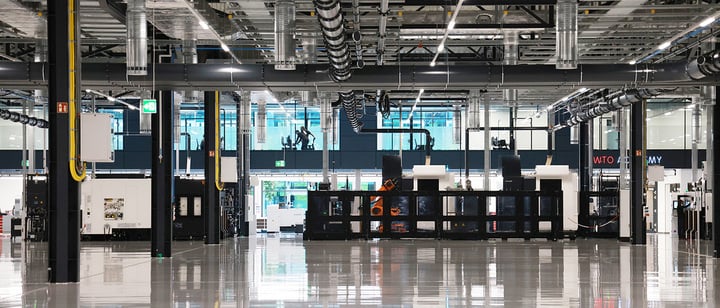
For years, production costs have been heading in only one direction, that is to say, steeply upward, while the demand is for ever lower manufacturing prices. On top of this, there is a lack of skilled workers. These are the challenges that confront many manufacturers, including WTO, a maker of static and driven precision toolholders. The solution appears to be obvious: a fully automated production hall. In series production, one can always rely on established methods, but for small batch (…)
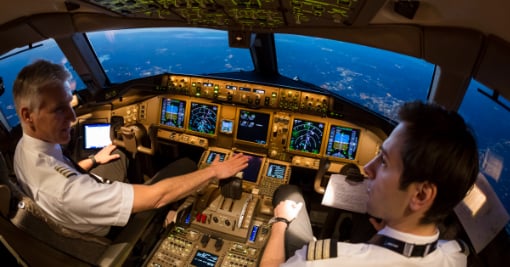
Led by CSEM, the PEGGASUS consortium is set to enable new types of human–machine interface (HMI) across cockpit avionics, pushing the boundaries of augmentation in the cockpit. Using the latest in artificial intelligence (AI) and computer vision technologies, this European-funded project will integrate—for the first time—remote eye-gaze tracking and gesture recognition for pilots in a single framework. Its purpose is to enhance human-machine interaction in the complex flight operations of (…)
Led by CSEM, the PEGGASUS consortium is set to enable new types of human–machine interface (HMI) across cockpit avionics, pushing the boundaries of augmentation in the cockpit. Using the latest in artificial intelligence (AI) and computer vision technologies, this European-funded project will integrate—for the first time—remote eye-gaze tracking and gesture recognition for pilots in a single framework. Its purpose is to enhance human-machine interaction in the complex flight operations of (…)

Applications are now being accepted for the Swedish Steel Prize 2019, the steel industry’s most prestigious award, which celebrates its 20th anniversary this year The Swedish Steel Prize is an award for ideas and products that have an impact on future steel solutions, and it attracts competitors from across the world. It will be awarded on November 14th, 2019 in Stockholm, Sweden as part of the Swedish Steel Prize 2019 event. Applications are now being accepted. This year marks the 20th (…)
© 2026 EUROTEC - ALL RIGHTS RESERVED.